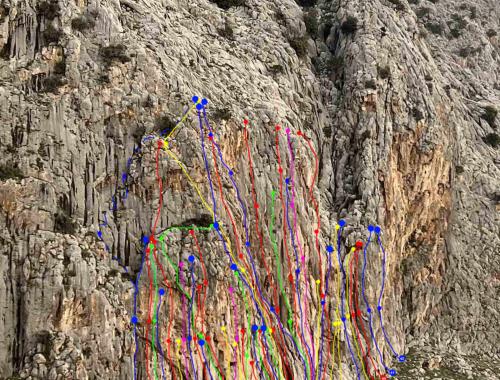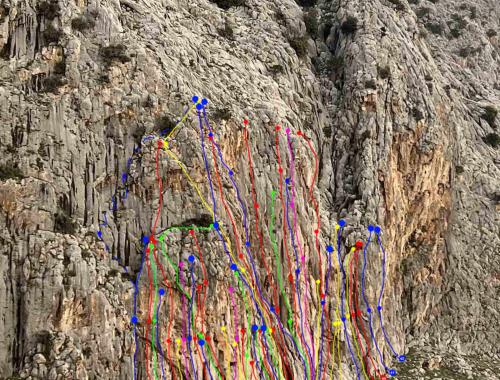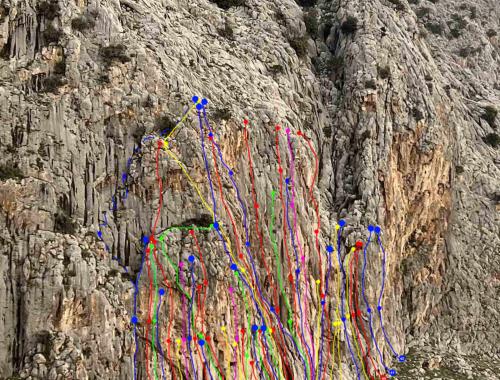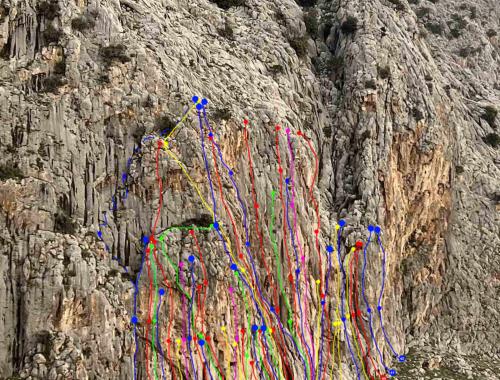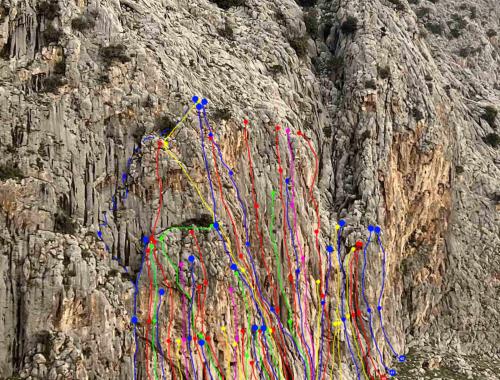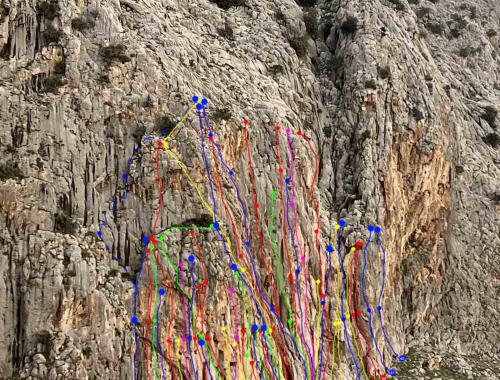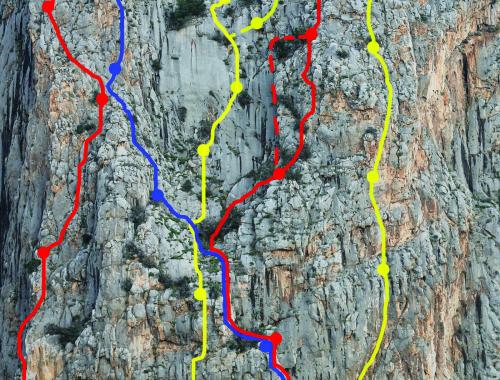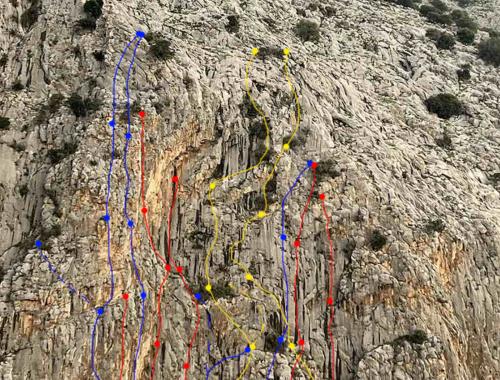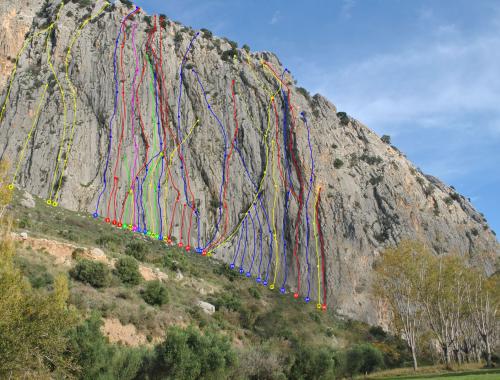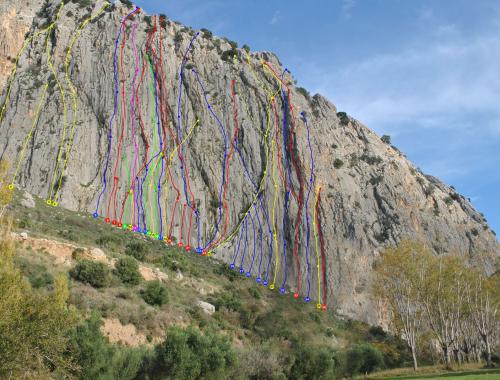
Voie sportive 6a+ (80 m, 2 longueurs) — élégante, technique et idéale pour progresser en dalle.
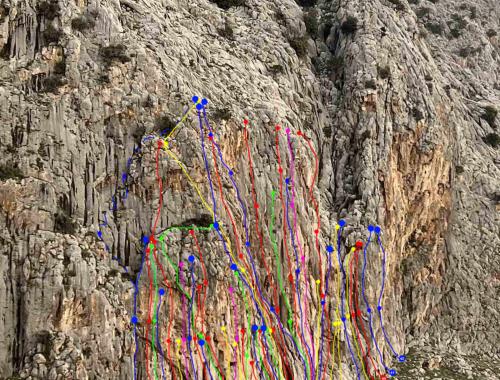
6a+ multi-pitch at Rubicon — enjoyable climbing on excellent rock, with six pitches and fully equipped belays for abseil descent.
Technical Details
Length (m)
265.00
Pitches
6
Bolts
20
Belays
6
Rings
0
Description
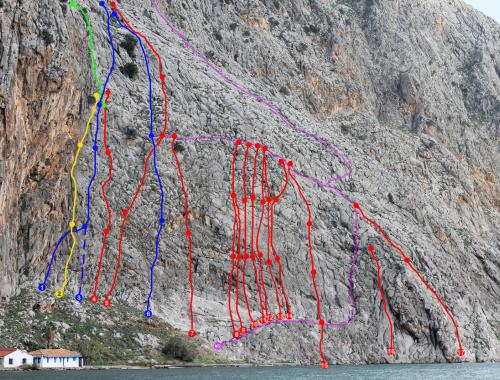
“South Wind” (6a+, 265 m) was opened and first climbed on October 13, 2001 by D. Mavropoulos and D. Aivazidis.
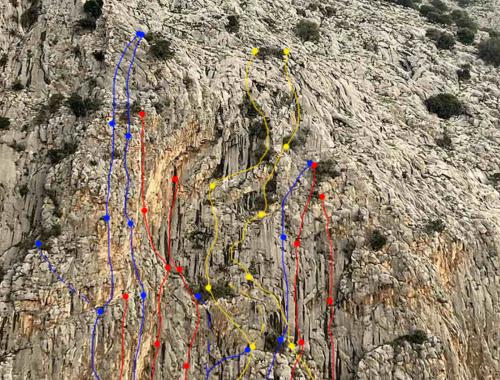
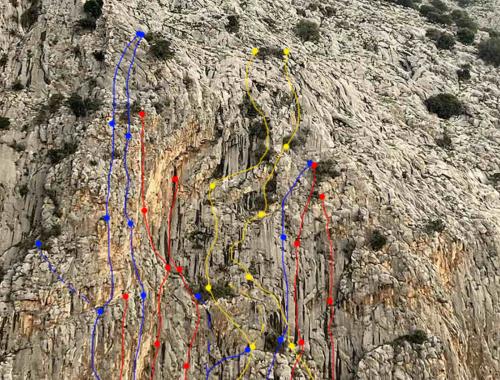
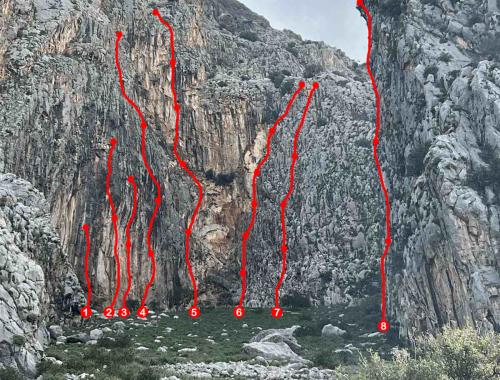
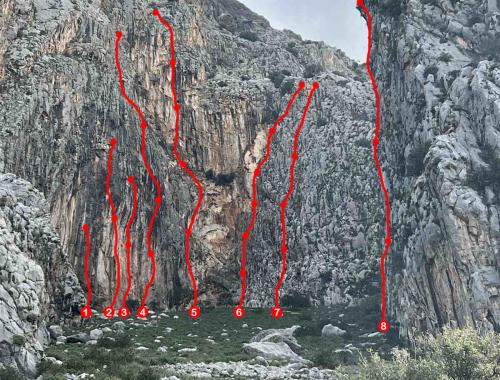
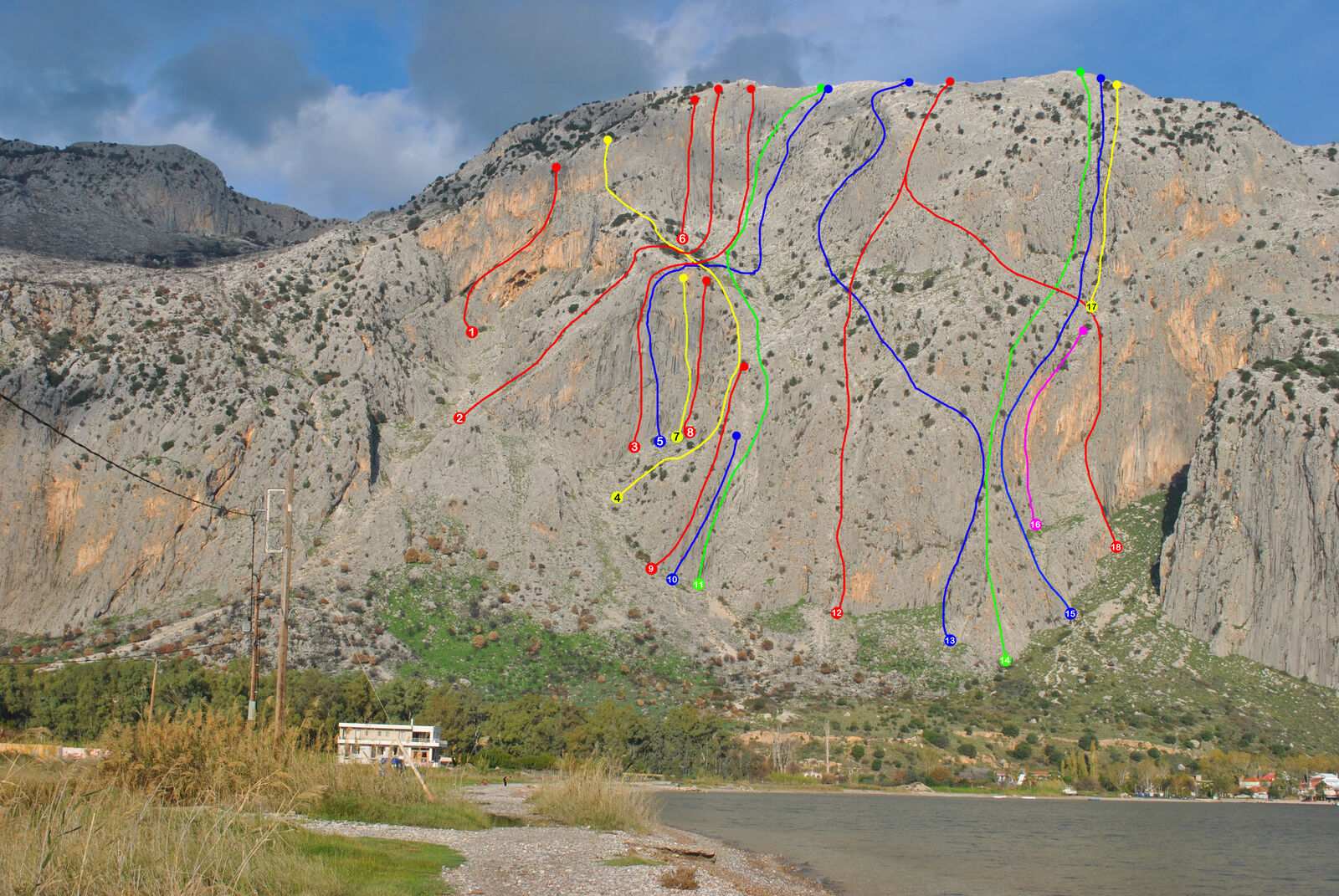
The route begins at the top of a large scree slope, just right of a distinctive crack, located beside the path leading to the Varasova summit, after about 20 minutes of walking. It consists of six pitches and finishes on the top of a prominent pillar, reaching the large inclined ledge that allows for an easy return.
The rock quality is excellent, with no sharp edges, offering pleasant, flowing climbing with no surprises or serious difficulties. The second pitch is the hardest, while the third is arguably the most beautiful. The fourth and sixth pitches are exactly 50 m long — 50 m ropes just reach the belay. At the exit of the sixth pitch’s dihedral, there are some loose wedged stones, so care is needed to avoid rockfall onto the second.
The route is equipped with bolts, but a set of nuts, a few medium-to-large friends, and slings are recommended. The wall provides many natural options for intermediate protection or belays (cracks, spikes, tunnels, or trees).
All belays are equipped with double rings, aligned for straightforward abseil descent. However, the sixth abseil is exactly 50 m, and there is a risk of rope jamming during retrieval. According to climber reports from 2014, the fourth and sixth belays are missing their second ring — it’s advisable to use a sling on a nearby tree instead. Old slings found on the route should not be trusted.
The first repeat of the route was done on February 2, 2002, by A. Simatis and N. Papas.
The route begins at the top of a large scree slope, just right of a distinctive crack, located beside the path leading to the Varasova summit, after about 20 minutes of walking. It consists of six pitches and finishes on the top of a prominent pillar, reaching the large inclined ledge that allows for an easy return.
The rock quality is excellent, with no sharp edges, offering pleasant, flowing climbing with no surprises or serious difficulties. The second pitch is the hardest, while the third is arguably the most beautiful. The fourth and sixth pitches are exactly 50 m long — 50 m ropes just reach the belay. At the exit of the sixth pitch’s dihedral, there are some loose wedged stones, so care is needed to avoid rockfall onto the second.
The route is equipped with bolts, but a set of nuts, a few medium-to-large friends, and slings are recommended. The wall provides many natural options for intermediate protection or belays (cracks, spikes, tunnels, or trees).
All belays are equipped with double rings, aligned for straightforward abseil descent. However, the sixth abseil is exactly 50 m, and there is a risk of rope jamming during retrieval. According to climber reports from 2014, the fourth and sixth belays are missing their second ring — it’s advisable to use a sling on a nearby tree instead. Old slings found on the route should not be trusted.
The first repeat of the route was done on February 2, 2002, by A. Simatis and N. Papas.
Access
About 20 minutes via the summit path of Varasova, starting from Kryoneri, then turning right at the distinctive crack above the large scree slope.
Approach time: 20 minutes
Recommended Equipment
Set of nuts
Medium to large friends
Slings
Two 60 m ropes (for six abseils)
Helmet
Medium to large friends
Slings
Two 60 m ropes (for six abseils)
Helmet